Why We Built It
As local environments grow, it becomes hard to remember where repositories live, which branches are active, and what each project is responsible for. RepoStellar solves this by building a local system map for Git repositories, with no required cloud sync.
Local-First by Design
RepoStellar runs on your machine, binds to 127.0.0.1, and keeps scan metadata local by default. Your source tree stays under your control.
What RepoStellar Includes
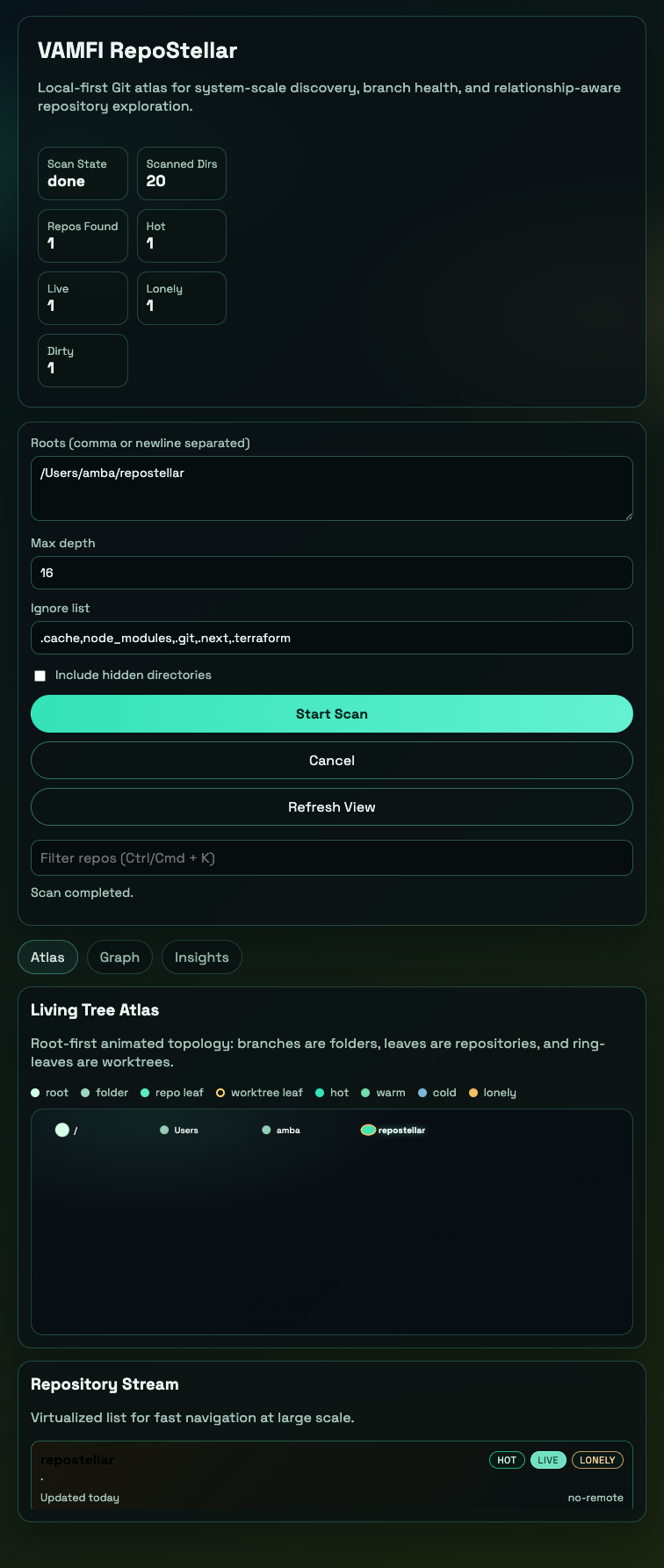
Atlas View
Hierarchical system tree with repositories highlighted and sortable by activity, name, or branch state.
Graph View
Interactive relationship map with clustering modes for paths, remotes, and activity patterns.
Repo Drawer
Branch status, dirty state, remotes, inferred repo summary, and language/tooling badges in one panel.
File + Commit Explorer
Lazy file browsing and recent commit history for fast navigation without leaving the app.
Scale and Performance
The scanner uses worker threads and incremental refresh to stay responsive on large systems. UI lists and trees are virtualized so navigation remains smooth even with hundreds or thousands of repositories.
Quick Start
Run RepoStellar locally in a few commands:
git clone https://github.com/VAMFI/repostellar.git
cd repostellar
npm install
npm run devProduct Tour
Atlas, repository drawer, graph modes, and insights in one loop. Static preview first, then the animated walkthrough.
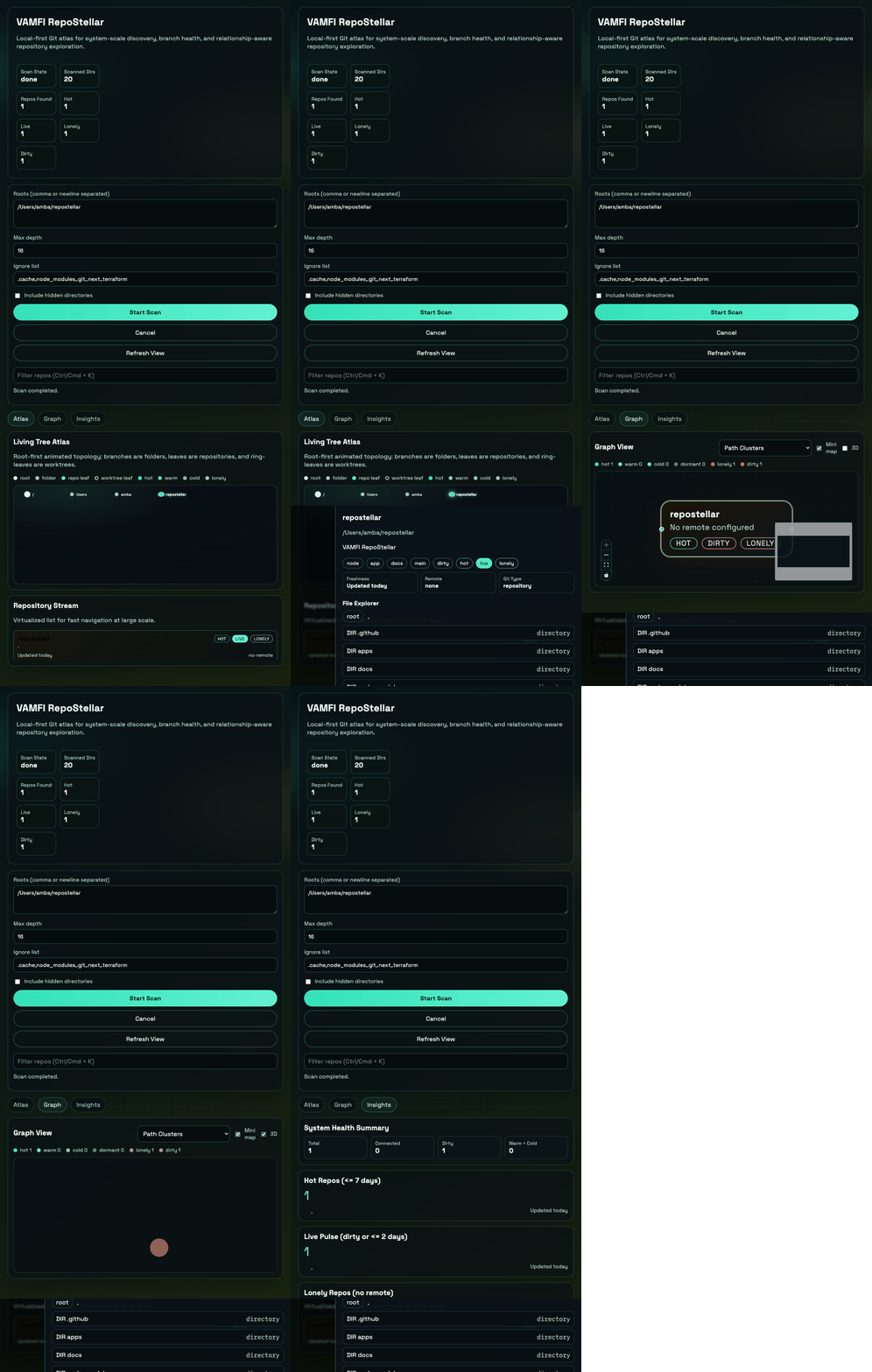
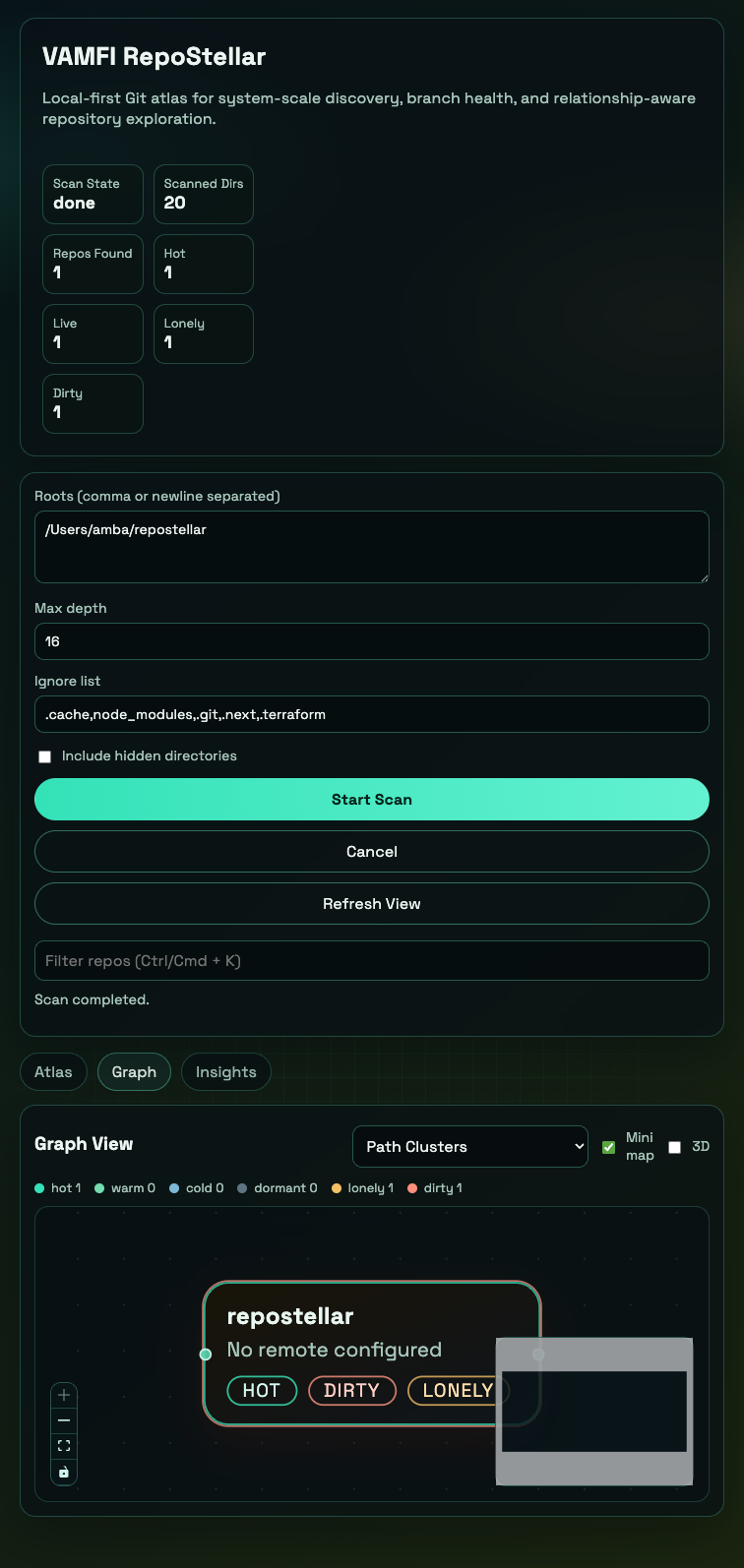
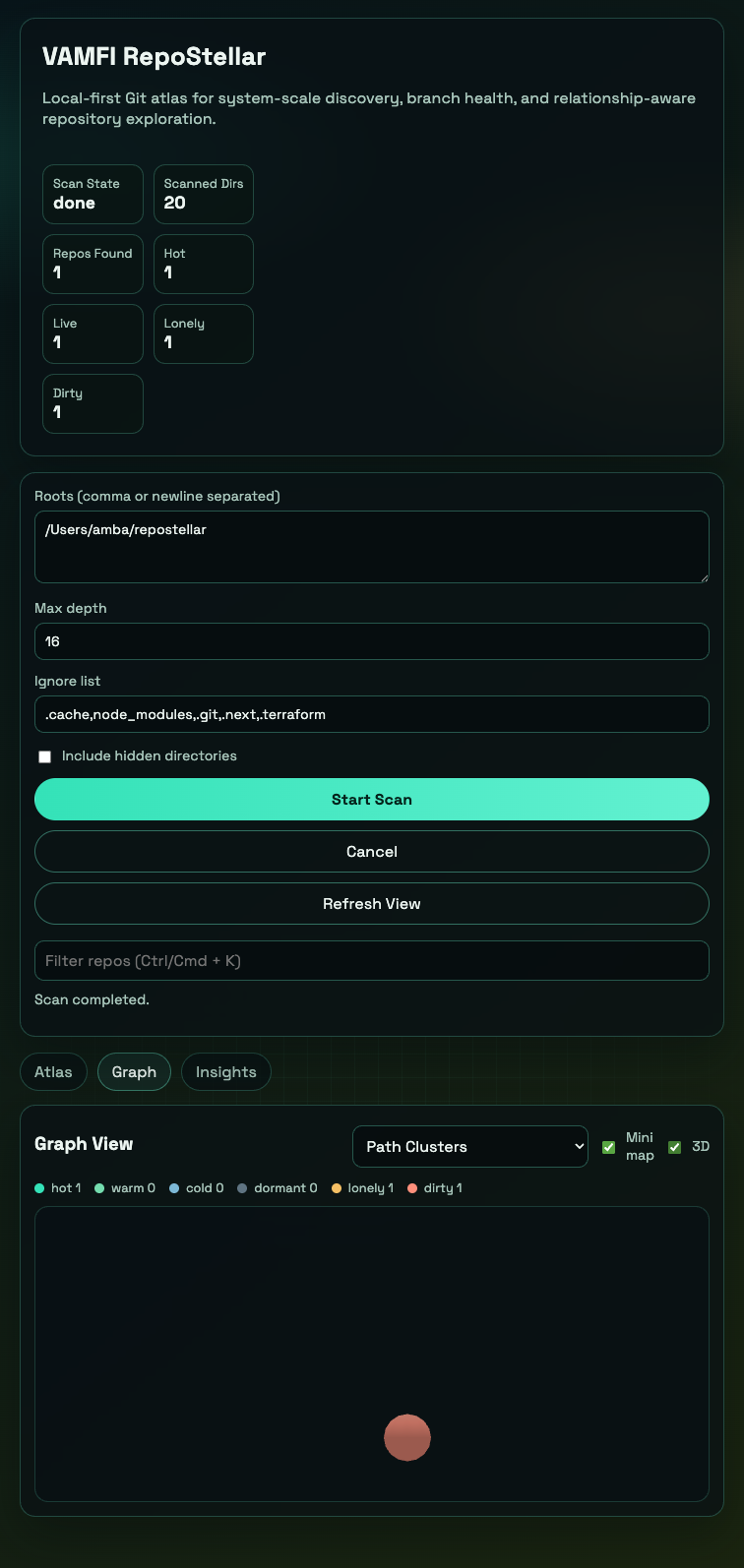
Updated March 5, 2026: Graph View was redesigned for clearer clustering and status readability.
Open Source and Roadmap
RepoStellar is released under Apache-2.0 with contribution guidelines, code of conduct, and security policy included. We’re continuing to improve graph readability at very high node counts, add richer commit timeline controls, and expand repository insight heuristics.